
Planning a shed in San Antonio is easier when you separate three questions early:
- Does the City of San Antonio require a permit for this structure?
- Does your HOA or neighborhood architectural committee need to approve the design?
- Does the planned location work for access, drainage, setbacks, and daily use?
This guide is written for homeowners who want a straightforward storage shed, workshop shed, or backyard utility space without guessing at the approval path.
For service-area coverage, neighborhood details, and completed local examples, visit our custom sheds in San Antonio service page.
Quick Answer
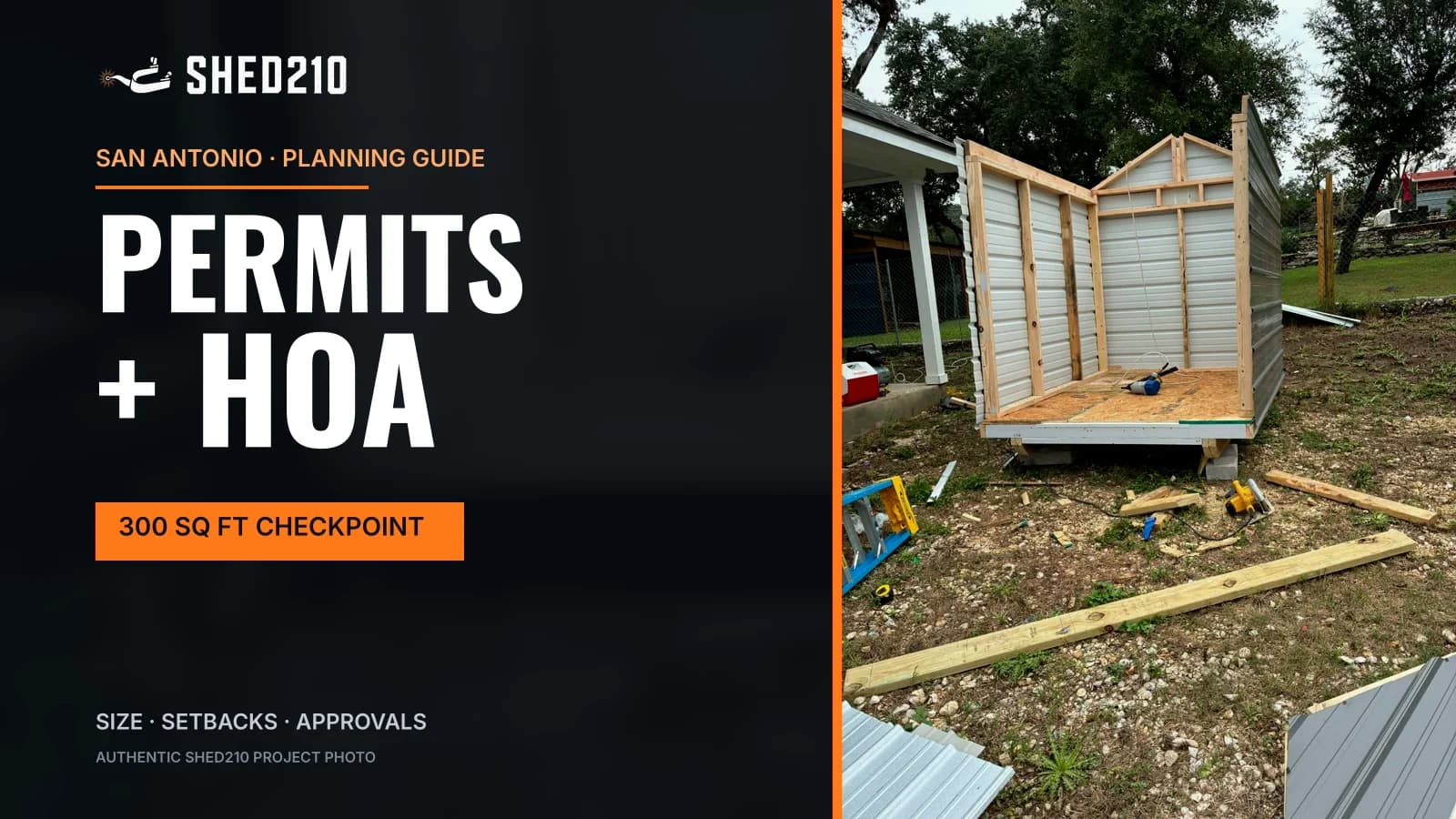
The City of San Antonio Development Services homeowner FAQ says a permit is required for an accessory structure greater than 300 sq. ft. and that building setbacks apply. The City's residential permits page also lists accessory-structure permit categories and site-plan requirements, so larger or unusual projects should be confirmed against the current DSD process before you build.
Start with these official pages:
- City of San Antonio Development Services getting started FAQ
- City of San Antonio residential permits
HOA approval is separate. A shed can be acceptable from a city-permit standpoint and still need HOA review for size, color, roof style, materials, placement, or visibility from the street.
What to Confirm Before You Choose a Shed Size
Before finalizing dimensions, gather these details:
- Property address and whether it is inside San Antonio city limits
- Planned shed footprint and height
- Whether the shed will include electrical, plumbing, or other utility work
- Proposed placement in relation to fences, easements, property lines, and the home
- HOA or architectural-review requirements
- Whether the property is in a historic district, floodplain, overlay district, or another special review area
If any of those details are uncertain, confirm with City DSD or your HOA before treating a quote as ready for scheduling.
San Antonio Permit Notes
For standard backyard sheds, the first size checkpoint is 300 sq. ft. The City DSD FAQ says accessory structures greater than 300 sq. ft. require a permit. It also notes that building setbacks apply.
The residential permits page is useful because it shows what documents are commonly tied to residential permit categories, including site plans for accessory structures. That matters because the approval path is not only about square footage. Placement, zoning, special districts, utilities, and the property itself can affect what is required.
Avoid relying on old fee ranges, forum comments, or a neighbor's project as your only source. Permit processes can change, and nearby homes can have different zoning or HOA requirements.
HOA Review: What Usually Matters
HOA rules vary by neighborhood, but shed review commonly focuses on:
- Maximum size or height
- Exterior color
- Roof style and roof material
- Siding or wall material
- Door placement
- Visibility from the street or neighboring properties
- Distance from fences or property lines
- Whether a concrete pad, anchors, or screening are required
Ask for the written guideline or architectural-review form before choosing final options. It is much easier to quote around known requirements than to redesign after a denial.
Site Photos That Help
Good photos can prevent back-and-forth and help the quote reflect real build conditions. Send:
- The planned shed location from several angles
- The route from driveway or street to the backyard
- Gate openings and narrow side-yard points
- Fence lines and nearby trees
- Slope, drainage paths, or low spots
- Any utility boxes, meters, or easements near the proposed location
Do not send documents with private account numbers or unrelated personal information. City-level location and property-specific planning details are enough for an initial conversation.
Browse completed Shed210 projects in the full gallery to compare real door placements, roof styles, and storage layouts while keeping customer locations private.
Common San Antonio Planning Scenarios
A smaller storage shed in an HOA neighborhood
Even when the shed footprint is below the city permit threshold, HOA approval may still drive the design. Confirm colors, roof style, placement, and screening before ordering.
A larger backyard workshop
Larger footprints may cross the City DSD permit threshold. Confirm the permit path, site-plan needs, and any utility-related requirements before scheduling.
If you are weighing size and upgrades against the total project budget, the San Antonio Shed Cost Guide explains the price drivers and site costs to compare.
A replacement shed
If you are replacing an old shed, check whether removal, pad condition, or a changed footprint affects the project. A like-for-like replacement can still raise HOA or site questions.
A property outside San Antonio city limits
Rules can change outside city limits or in nearby municipalities. Confirm the authority for your exact address rather than assuming San Antonio's process applies.
A Practical Pre-Quote Checklist
Use this checklist before you request a final build date:
- Pick a target size and use case.
- Check whether your planned footprint is greater than 300 sq. ft.
- Review HOA or architectural-review rules.
- Take clear access and placement photos.
- Note special property constraints such as slope, drainage, easements, or utility areas.
- Ask City DSD or the relevant municipality when the permit path is unclear.
FAQ
Do all San Antonio sheds need a permit?
No. The City DSD homeowner FAQ specifically calls out accessory structures greater than 300 sq. ft. as requiring a permit. Smaller projects can still have zoning, HOA, utility, or special-area constraints.
Can my HOA require approval even if the city does not require a permit?
Yes. HOA review is private neighborhood governance, not the same as a city building permit.
Should I get HOA approval before or after a quote?
You can start a quote first, but final design choices should match the written HOA rules before scheduling.
What if my shed will have electrical work?
Ask City DSD and the relevant licensed trade professional before assuming a standard shed process applies. Utility work can add requirements beyond the shed structure itself.
Does Shed210 publish customer addresses for project examples?
No. Project proof should use customer-safe details such as city-level location, size/use case, features, and photos approved for public use.
Final Takeaway
For San Antonio shed planning, do the simple checks early: size, placement, HOA, access, and the current city permit path. A clear quote is more useful when those constraints are known up front.
Get Instant Price Text Shed210